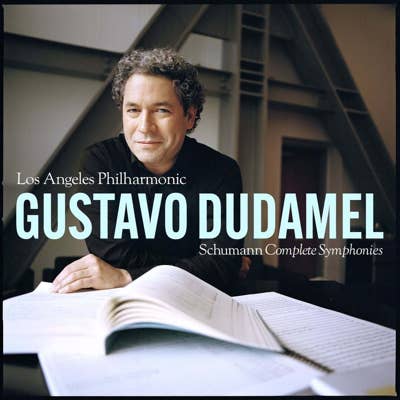
Schumann: Complete Symphonies
Recorded live at Walt Disney Concert Hall in 2018, Schumann: Complete Symphonies captures Gustavo Dudamel and the Los Angeles Philharmonic in a sweeping exploration of Robert Schumann’s four symphonies. From the exuberant optimism of the “Spring” Symphony and the tragedy-to-triumph journey of the Second to the radiant energy of the “Rhenish” and the dramatic unity of the Fourth, these performances illuminate the imagination, passion, and emotional intensity at the heart of Schumann’s orchestral music. Together, they reveal Schumann’s remarkable creative journey while showcasing the orchestra’s virtuosity, warmth, and expressive range.
Listen to Schumann: Complete Symphonies:
Apple Music | Spotify | Amazon Music | YouTube Music | Idagio | Tidal | Deezer
Track Listing
Symphony No. 1 in B-Flat Major, Op. 38 “Spring”
I. Andante un poco maestoso - Allegro molto vivace
II. Larghetto
III. Scherzo. Molto vivace
IV. Allegro animato e grazioso
Symphony No. 2 in C Major, Op. 61
I. Sostenuto assai - Un poco più vivace - Allegro ma non troppo - Con fuoco
II. Scherzo. Allegro vivace
III. Adagio espressivo
IV. Allegro molto vivace
Symphony No. 3 in E-Flat Major, Op. 97 “Rhenish”
I. Lebhaft
II. Scherzo. Sehr mäßig
III. Nicht schnell
IV. Feierlich
V. Lebhaft
Symphony No. 4 in D Minor, Op. 120 (1851 Version)
I. Ziemlich langsam - Lebhaft
II. Romanze. Ziemlich langsam
III. Scherzo. Lebhaft
IV. Langsam - Lebhaft


About the Composer:
Born: 1810, Zwickau, Germany
Died: 1856, Endenich, Germany
Robert Schumann, subject to unpredictable mood swings, worried constantly about madness and death. Abandoning a career as a concert pianist, he focused on composing and imbued his greatest works with tremendous imagination and atmosphere. He eventually succumbed to the madness he feared so much, dying in an asylum at the age of 46.

Preview – Symphony No. 1 in B-Flat Major, Op. 38, “Spring”: IV. Allegro animato e grazioso
Symphony No. 2 in C major, Op. 61: II. Scherzo: Allegro vivace
Symphony No. 3 in E-flat major, Op. 97, “Rhenish”: I. Lebhaft